
Shares of Apple Inc. rose 2% on Friday, supported by strong iPhone shipment data from China that underscored the company’s resilience in a challenging smartphone market.
The stock gained, even as broader concerns around slowing demand and rising component costs continued to weigh on the sector. The move comes despite Apple stock remaining down year-to-date.
China shipment growth boosts sentiment
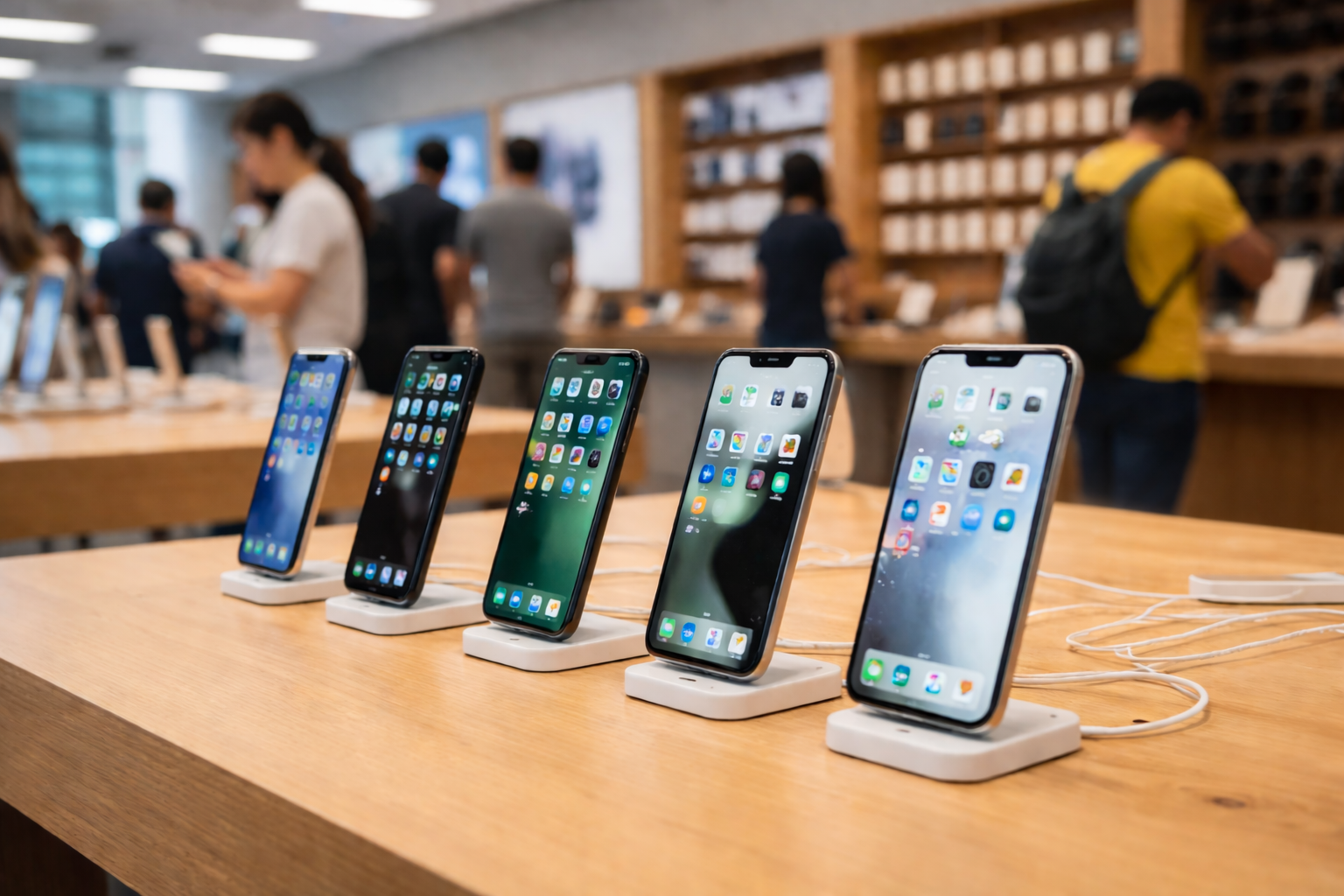
Apple’s gains were driven by a robust 20% year-over-year increase in iPhone shipments in China during the first quarter, according to Counterpoint Research.
The growth significantly outpaced the broader market, where total smartphone shipments declined 4% over the same period.
Demand for the iPhone 17 lineup, combined with targeted promotions and government subsidies, helped Apple expand its market presence. The company secured a 19% market share, placing it just behind Huawei, which led the market with a 20% share.
Huawei’s position was supported by strong late-quarter sales, including its Enjoy 90 series, marking its highest market share since late 2020.
Apple’s performance stood out in a sector facing headwinds from rising memory chip prices and supply chain disruptions, which have increased production costs across the industry.
Premium positioning offers competitive edge
Analysts say Apple’s premium product mix and tight control over its supply chain have allowed it to navigate cost pressures more effectively than competitors.
Counterpoint noted that the company is better positioned to absorb rising component costs and may pass on only part of those increases to consumers.
Strong brand perception has also played a role in sustaining demand. Ivan Lam, senior analyst at Counterpoint Research, highlighted the company’s appeal among Chinese consumers.
“As most rivals raise prices, Apple stands out for value, with Chinese consumers knowing its products last at least three years,” Lam said, in a Reuters report.
This perceived durability has helped Apple attract buyers even as higher prices weigh on demand, particularly in the budget segment where competitors face tighter margins.
In contrast, Xiaomi Corp. saw shipments plunge 35%, reflecting weaker flagship performance and cautious pricing strategies.
“Rising component costs are already driving up retail prices, affecting both legacy models and the launch prices of new devices. This trend is expected to keep the Chinese smartphone market under significant pressure through the second quarter,” Lam added.
Market outlook remains cautious
Despite Apple’s strong quarterly performance, the broader outlook for China’s smartphone market remains subdued.
Counterpoint expects shipments in the country to decline 9% in 2026, with ongoing cost pressures and a tough comparison with last year’s subsidy-driven demand weighing on growth.
A potential boost could come from the mid-year “618” shopping festival, which may provide a short-term lift in demand.
Investor sentiment around Apple has shown signs of improvement.
Bank of America reiterated its positive stance on the stock, calling Apple the “highest quality name” in its coverage universe.
“We continue to view AAPL as a high-quality compounder despite underperformance YTD vs. S&P, supported by resilient Services growth and a healthy product cycle,” the firm said.
Beyond smartphones, Apple is also benefiting from growing interest in artificial intelligence applications. According to a Wall Street Journal report, demand for locally run AI tools has boosted sales of Apple’s Mac Mini desktop computers.
While challenges remain in the near term, Apple’s strong execution and positioning in premium segments appear to be supporting its stock performance, even as the broader market faces ongoing pressure.
The post Apple stock rises as China iPhone surge defies market slowdown appeared first on Invezz