
Micron stock’s next catalyst may be coming from the Chinese model that initially unsettled semiconductor investors.
MU closed Thursday at $990.21, up 3.2%, after Alphabet raised its 2026 capital-spending forecast and revived confidence in data-centre demand.
Another signal is emerging from Moonshot AI’s Kimi K3. The low-cost, open-weight model was viewed as a threat to expensive Western infrastructure, but its popularity quickly strained computing capacity.
That reversal supports a Wall Street argument that cheaper AI may reduce the cost of each task while increasing the number of tasks, deployments and memory chips required.
Kimi K3 turns an AI scare into a memory signal
Kimi K3 is a mixture-of-experts model with 2.8 trillion parameters and 50 billion active.
Its performance and low API prices revived comparisons with DeepSeek, raising fears that US technology groups were overspending on processors and data centres.
Demand then produced the opposite warning. Moonshot said usage pushed its infrastructure to capacity, forcing it to pause new subscriptions so customers could retain access.
For Micron, the point is not a confirmed order from Moonshot.
No such purchase has been disclosed, but the signal is that large, inexpensive models still consume memory when deployed at scale.
Bank of America analyst Vivek Arya said Chinese pricing reflects “business-model choices” rather than lower hardware costs, MarketWatch reported.
He added that model weights and active parameters can require “the same or more memory.” BofA reiterated its Buy rating and $1,550 target.
Open-weight models can transfer infrastructure spending from the developer to businesses operating them.
Deployments require servers, DRAM and storage even when access to the model is cheap.
Micron stock: Why cheaper AI could increase memory demand
The investment case resembles the Jevons paradox: when technology becomes cheaper, total consumption can rise because more customers adopt it and existing users run more workloads.
Wedbush analyst Matt Bryson said larger models require more memory to hold their parameters, either increasing memory content per accelerator or forcing larger chip clusters.
Continued adoption of Chinese models could therefore be “arguably good for memory vendors,” he said.
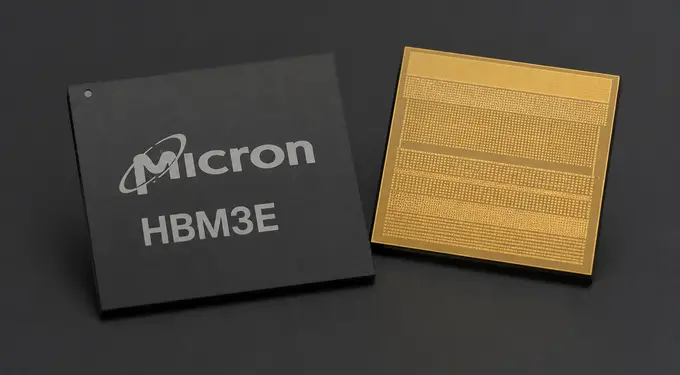
Micron, SK Hynix and Samsung are suppliers of high-bandwidth memory used alongside AI accelerators.
Wider deployment can also lift demand for DRAM and NAND storage needed to serve models and retain data.
Kimi K3 strengthens the demand thesis without proving that Micron will sell directly into China. Export restrictions, local suppliers and procurement arrangements make that conclusion premature.
The catalyst arrives during an existing shortage
The signal matters because data-centre memory supply is already tight.
Morgan Stanley analyst Joseph Moore said shortages “show no signs of abating,” according to MarketWatch, and expects prices to rise at least 25% from the second quarter to the third.
Moore argued that weakness in PCs, smartphones or consumer products could become a misleading “false flag” because AI data centres are absorbing so much DRAM.
Cloud customers are paying premiums to secure supply, while shortages are expected to persist through 2028.
Micron has reinforced that outlook by signing 16 multiyear customer agreements expected to generate about $22 billion in cash deposits and related financial commitments.
The post Micron stock gets an unexpected clue from China’s latest AI experiment appeared first on Invezz