

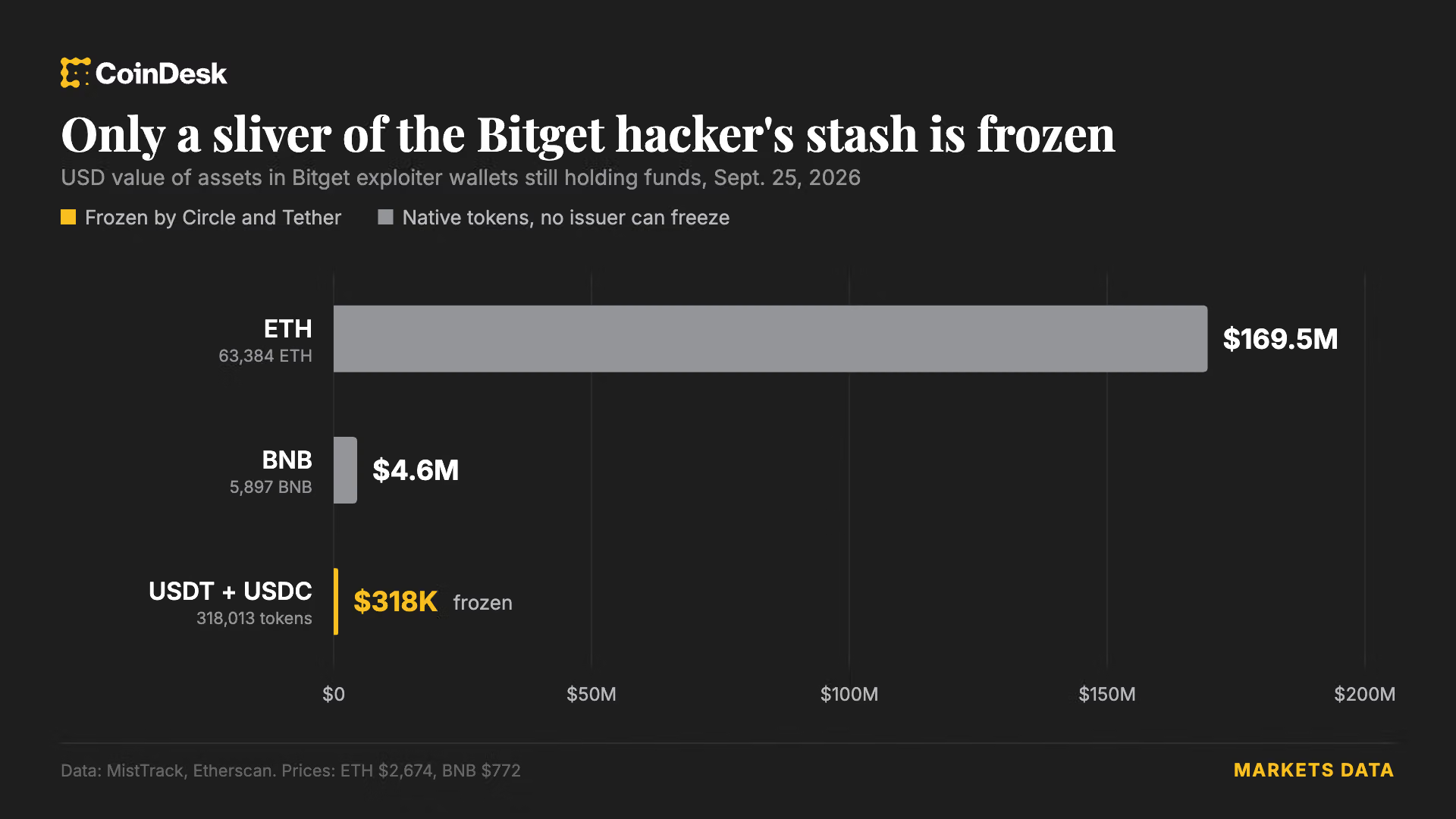
In a swift but limited effort to recover losses from one of the largest recent cryptocurrency thefts, stablecoin giants Circle and Tether have stepped in to freeze a wallet linked to a massive heist at Bitget. On Friday morning, Circle blacklisted an address identified by Etherscan as Bitget Exploiter 8, followed shortly by similar action from Tether. While the move effectively locks down approximately 318,000 dollars in combined USDC and USDT, it represents only a tiny sliver of the estimated 351.6 million dollars stripped from the exchange during Thursday’s attack.
The scale of the theft remains daunting because much of the loot consists of Ether rather than stablecoins. According to blockchain security firm MistTrack, separate exploiter addresses still hold more than 63,000 ETH. Unlike centralized stablecoins, which can be disabled via a central authority’s blacklist, there is no single entity capable of freezing these native Ethereum tokens, leaving those vast sums largely beyond the reach of recovery efforts through traditional corporate intervention.
Bitget CEO Gracy Chen provided clarity on how the breach occurred, explaining that hackers managed to compromise a backend system within the exchange’s wallet infrastructure. By spoofing transaction data and manipulating authorization processes, the attackers were able to trick the system into releasing funds without needing access to private keys. To reassure panicked investors, Chen noted that Bitget maintains a user protection fund exceeding 464 million dollars, which will be used to cover the shortfall caused by the exploit.
For Circle, this rapid response serves as something of a redemption arc following heavy criticism earlier this year. During April’s Drift hack, analysts and prominent figures like ZachXBT argued that Circle was far too slow to act while millions in stolen USDC migrated across different blockchains. While Circle previously maintained it only freezes assets when legally compelled to do so, their speed in this instance suggests a shift toward a more proactive approach in combating digital asset theft.