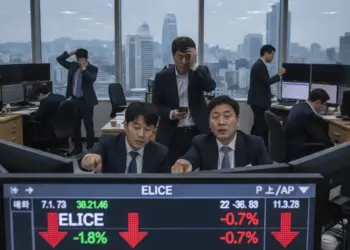

A shaky debut for a South Korean cloud provider sent ripples through the global technology sector on Tuesday, triggering a sell off in data center stocks and fueling fears that the artificial intelligence boom may be hitting a wall. Shares of Elice plummeted 30 percent during its initial public offering overnight, leaving investors uneasy about the long term viability of specialized computing power providers. While Elice is relatively small compared to industry giants, market participants viewed the plunge as a canary in the coal mine for an entire asset class known as neoclouds.
The fallout quickly crossed oceans, putting immediate pressure on U.S. tech equities. Companies like CoreWeave and Nebius both saw their shares dip around 4 percent shortly after the opening bell, while Iren experienced an even steeper decline of approximately 6 percent. Analysts at HSBC noted that these struggles are compounded by heavy debt loads and slowing revenues from large language models, suggesting that the structural foundations of these niche cloud providers are increasingly fragile. Some experts believe there is significant room for further declines as the market recalibrates expectations.
This volatility comes amid growing skepticism regarding whether current AI demand can justify the massive amounts of capital being spent on hardware. Recent reports indicate that major players like Anthropic and OpenAI have seen decelerations in revenue growth or missed analyst targets entirely. This trend supports a grim prediction from Gartner, which suggests that up to 80 percent of neocloud operators could fail by 2030 because enterprise spending cannot keep pace with infrastructure costs. According to some researchers, the industry currently possesses more computing capacity than actual demand, leading to a winner take all scenario where only two dominant firms might survive.
The contagion eventually reached the semiconductor space, dragging down names that had previously led the AI rally. Chipmakers such as Micron, AMD, and Nvidia all traded lower on Tuesday as traders questioned if the frenzy for high end processors was peaking. With many companies giving away processing power via free trials to attract users, critics argue that the path to profitability remains unclear for those building the physical backbone of the AI revolution.