

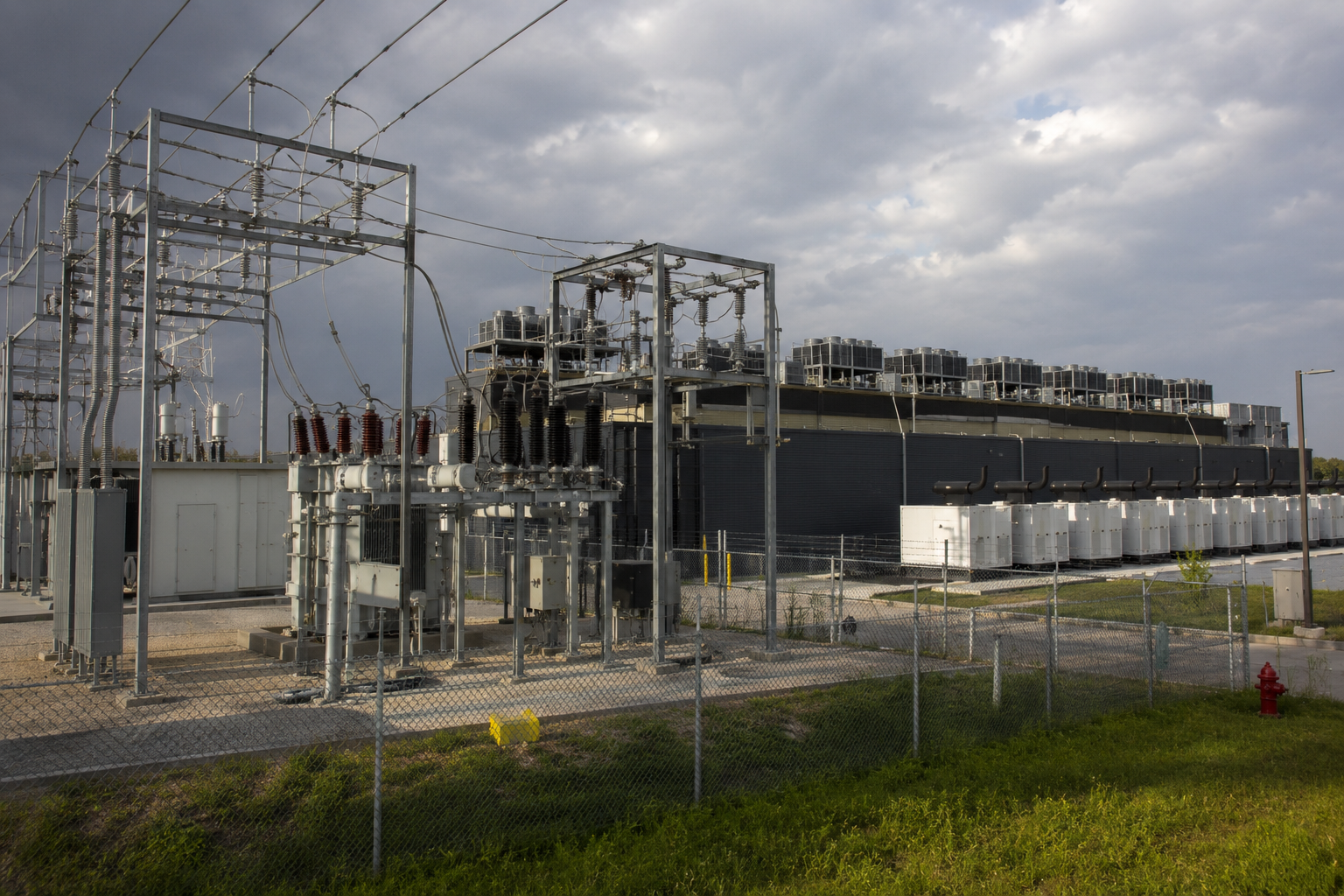
Europe’s soaring electricity prices are threatening its ambitions to compete with the US and China in artificial intelligence, as power-hungry data centers face mounting costs and investors increasingly look elsewhere, according to a CNBC report.
Experts warn that without cheaper energy, Europe risks falling far behind in the AI race.
Europe has set its sights on becoming a leader in AI, but the region’s energy costs are undermining those ambitions.
Europe’s AI challenge
According to the International Energy Agency (IEA), electricity prices for energy-intensive industries in Europe are, on average, double those in the US and 50% higher than in China and India.
This disparity is particularly damaging for AI, since data centers—essential to training and running large models—consume vast amounts of power.
Michael Brown, global investment strategist at Franklin Templeton, told CNBC that geography is now a decisive factor in AI investment.
“If I were making the next $7 billion data center, it would be in the US or China,” he said, highlighting Europe’s disadvantage.
Data centers and energy strain
Data centers already account for 2% of global electricity consumption, up from 1.7% in 2024, according to the International Data Center Authority (IDCA).
In some countries, consumption is nearing critical thresholds: the US is at 6%, the UK at 5.8%, and Singapore at nearly 20%.
Once data centers exceed 5% of national electricity use, political and community pushback typically intensifies.
Olivier Darmouni, associate professor at HEC Paris, said the AI boom is a “wake-up call” for Europe to treat energy as a matter of economic sovereignty.
He warned that without fixing the energy system, Europe cannot achieve affordability, competitiveness, or technological leadership.
Winners and losers
Not all of Europe is equally affected.
Germany and the UK are struggling with high electricity costs—averaging $88.97 per MW in Germany and $111.65 in the UK, compared with $28 in the US.
This has already led to setbacks: OpenAI paused its Stargate project in the UK, citing energy costs and regulatory hurdles.
By contrast, France and the Nordics are emerging as winners. France benefits from its nuclear energy leadership, while Norway, Sweden, and Denmark enjoy low electricity prices and diverse energy mixes.
Nvidia’s principal programme manager, Vladimir Prodanovic, noted that “nearly every big AI company is in Norway,” with Microsoft investing billions in Nordic data centers, including a $6.2 billion deal in Norway and expansions in Sweden and Denmark.
Risks of falling behind
Chris Seiple of Wood Mackenzie identified three reasons Europe lags in data center development: high energy costs, geographic disadvantages, and slower infrastructure buildout.
He warned that these factors make Europe “a little bit more challenging” for AI investment compared to the US and China.
Darmouni added that Europe’s scale is far behind: “The scale of what we’re seeing in the US compared to Europe is like 1 to 100.”
Matching US capacity would require massive new investment, but soaring energy costs make that unlikely.
Outlook
Europe’s AI ambitions are colliding with its energy reality. Without cheaper electricity and faster infrastructure development, the region risks losing ground to the US and China.
Analysts say integration across national energy grids and new power sources is essential if Europe wants to compete.
Europe’s future in AI may hinge not on algorithms or talent, but on whether it can secure affordable electricity to power the data centers that drive the technology.
The post Europe’s AI future at risk as soaring power costs push data centers abroad appeared first on Invezz