

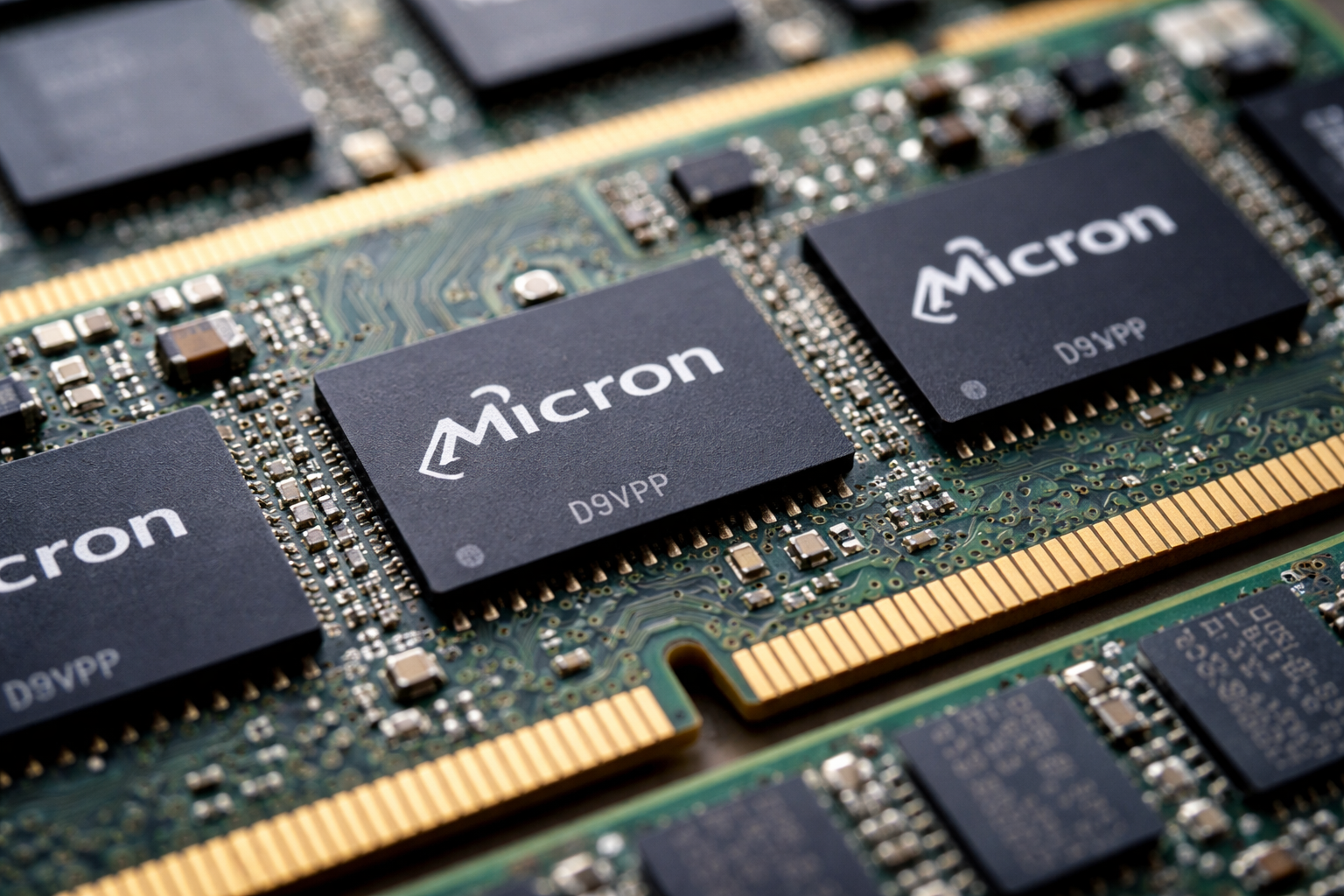
Micron Technology MU shares moved higher on Thursday as investors returned to semiconductor stocks and analysts grew increasingly optimistic about the outlook for memory-chip demand driven by artificial intelligence.
The stock gained more than 10% during the session, rebounding after a sharp pullback that had seen shares fall roughly 12% over the previous five trading days.
Despite the recent correction, Micron remains one of the strongest-performing semiconductor stocks of the year, with shares up more than 212% in 2026.
The recovery came even as rival memory-chip producer SK Hynix outlined plans to significantly expand wafer production over the coming decade.
Investors appeared largely unconcerned by the announcement, given the long timeline for the planned capacity increase and the continued strength of AI-related demand.
Analysts see AI demand extending memory cycle
Wall Street analysts argue that the recent decline in memory stocks does not signal the end of the industry’s current growth cycle.
Morgan Stanley analyst Shawn Kim said dynamic random-access memory (DRAM) remains a critical bottleneck in the artificial intelligence buildout, positioning Micron, SK Hynix and Samsung Electronics to continue benefiting from strong demand.
“The cycle is still accelerating, earnings revisions remain robust and more sustainable than most believe,” Kim said in a Wednesday note.
The analyst described the recent pullback in memory stocks as a necessary reset following substantial gains earlier in the year.
A correction among memory stocks that have had strong run-ups so far this year “was inevitable and ultimately healthy if this memory bull market is going to extend” through the end of the year, he said.
Kim added that growing demand from agentic AI applications could keep the current cycle running longer than previous memory upcycles.
He also pointed to long-term supply agreements between chipmakers and customers as a factor that could support higher valuation multiples across the sector.
Wolfe Research analyst Chris Caso expressed a similar view, arguing that long-term customer agreements could support “better multiples” because future supply expansions are increasingly tied to actual demand forecasts.
Price targets surge as memory pricing strengthens
Several brokerages responded to the improving outlook by sharply increasing their price targets for Micron.
Wolfe Research raised its target to $1,250 from $550 while maintaining an Outperform rating.
The firm cited stronger-than-expected memory pricing and increased demand for high-bandwidth memory (HBM), a key component used in advanced AI systems.
Wolfe increased its forecasts after estimating approximately 45% growth in memory pricing during Micron’s fiscal third quarter.
The firm expects favorable pricing trends to continue through calendar year 2026.
Daiwa also raised its price target on Micron, increasing its forecast to $1,600 from $700 while maintaining a Buy rating.
Despite the stock’s strong performance this year, Micron continues to trade at a relatively modest valuation.
According to Dow Jones Market Data, the company trades at roughly 9.4 times forward earnings estimates, placing it among the cheapest stocks in the S&P 500 on that basis.
Supply constraints remain a key theme
Industry participants continue to point to supply shortages as a major driver of higher memory prices.
Memory prices have nearly doubled since February, while lead times have expanded as demand outpaces available supply.
IDC expects those supply constraints to persist for several more years.
“We’re not seeing any relief to the memory shortage situation before the end of 2027, which means prices will continue to rise and PC manufacturers will struggle to maintain full product portfolios for the foreseeable future,” said Jean Philippe Bouchard, Vice President of Devices and Consumers at IDC.
Micron is also expanding its manufacturing footprint.
The company announced that it has selected Bechtel for its semiconductor project in New York, which is expected to support approximately 50,000 jobs, including more than 4,500 construction positions.
As AI-related demand continues to reshape the semiconductor industry, investors are increasingly betting that memory-chip suppliers such as Micron will remain among the sector’s primary beneficiaries.
The post Micron stock jumps as AI memory boom fuels analyst price target hikes appeared first on Invezz