
Shares of Regeneron Pharmaceuticals (REGN) fell about 12% on Monday, making the biotech company the worst-performing stock in the S&P 500 after its experimental melanoma treatment failed a pivotal late-stage clinical trial.
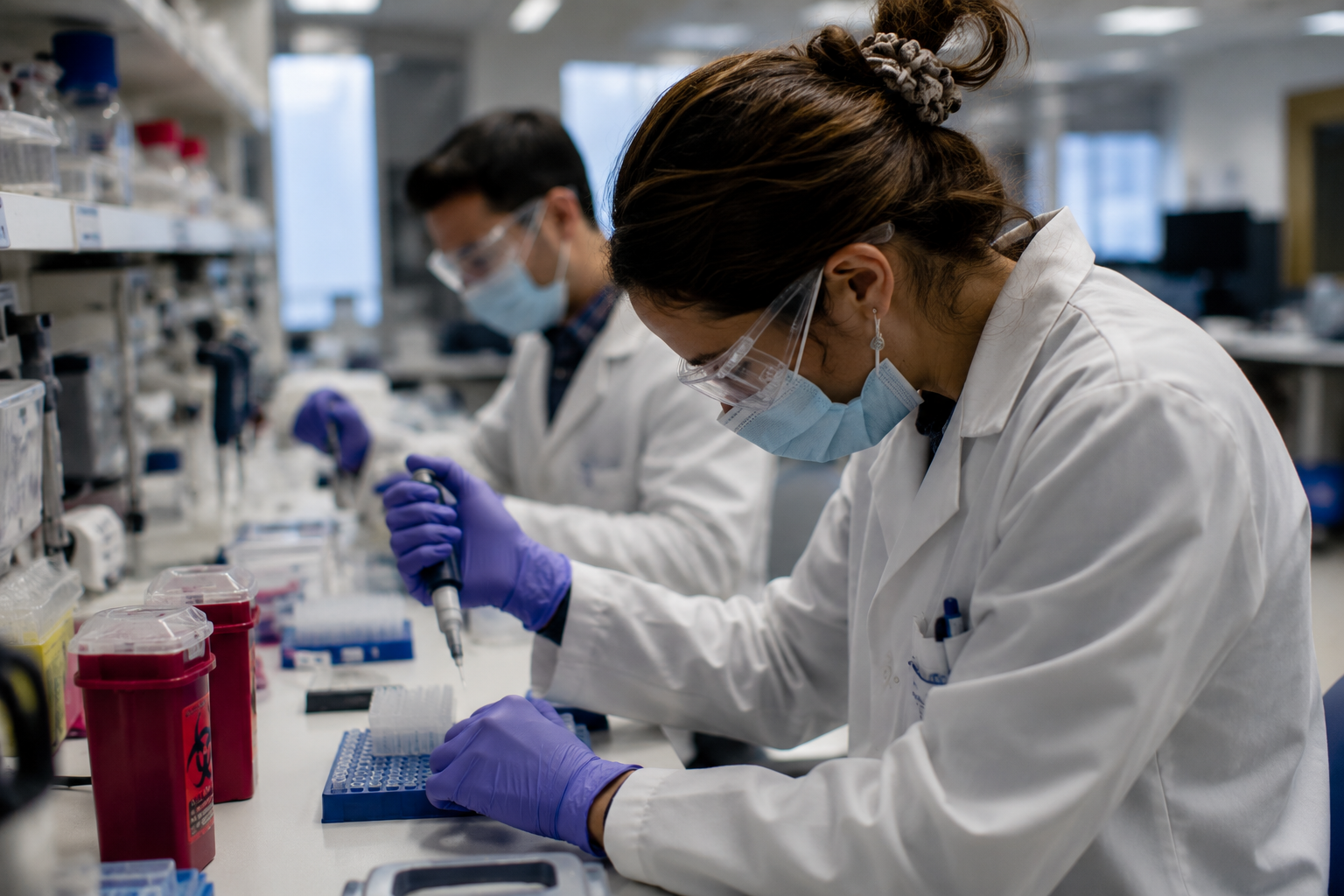
The sharp selloff followed Regeneron’s announcement that its high-dose fianlimab and cemiplimab combination failed to significantly outperform Merck’s Keytruda in a Phase 3 study involving patients with previously untreated metastatic melanoma.
The company said the treatment combination did not improve progression-free survival enough to achieve statistical significance against Keytruda, one of the world’s leading cancer immunotherapy drugs.
By midday trading, Regeneron shares had fallen to roughly $620, marking their lowest level since October and extending investor concerns surrounding the company’s broader oncology pipeline.
Late-stage melanoma trial misses key endpoint
Regeneron’s trial aimed to demonstrate that patients receiving fianlimab alongside cemiplimab could live significantly longer without disease progression compared with those receiving pembrolizumab, marketed by Merck as Keytruda.
According to trial data, patients treated with the Regeneron combination achieved a median progression-free survival of 11.5 months compared with 6.4 months for the pembrolizumab group.
However, the study failed to meet statistical significance, posting a hazard ratio of 0.845 and a p-value of 0.0627.
The result disappointed analysts who had viewed the trial as one of Regeneron’s most important near-term pipeline catalysts.
BMO analyst Evan Seigerman described the outcome as a major setback, writing: “A big miss leaves a tough road ahead.”
Bristol Myers Squibb’s competing Opdualag immunotherapy remains a benchmark in the melanoma market, though Regeneron said a separate late-stage study comparing its combination against Opdualag is still ongoing.
Analysts cut targets after pipeline setback
Following the trial failure, at least 10 Wall Street analysts reportedly lowered their price targets on Regeneron shares.
RBC Capital Markets analyst Brian Abrahams called the results a “tough break” after previously projecting peak annual sales of between $1.6 billion and $1.8 billion for fianlimab.
Abrahams noted that the company still benefits from strong performance from other products, including Dupixent and Eylea HD, but warned that the latest failure could intensify scrutiny of Regeneron’s strategy.
“But the failure of an active drug to get over the line on a key study, compounded by other recent missteps (itepekimab failure, HD launch with less competitive label, manufacturing hiccups, etc.) could cause some skeptics to more vocally question the company’s overall direction and strategy,” he wrote.
Piper Sandler lowered its price target on Regeneron to $855 from $875 while maintaining a positive rating on the shares.
The firm pushed its projected launch timeline for fianlimab to 2030 from the second half of 2027 and reduced its estimated probability of success to 15% from 50%.
Meanwhile, Bernstein SocGen Group cut its price target to $861 from $916 and removed fianlimab entirely from its financial model, eliminating approximately $1.2 billion in projected risk-adjusted peak sales.
Oncology pipeline now under greater pressure
The failed trial has increased pressure on Regeneron’s broader oncology ambitions at a time when competition across cancer immunotherapy markets remains intense.
Fianlimab belongs to a class of immunotherapy drugs designed to release molecular brakes on the immune system, allowing it to attack cancer cells more effectively.
The disappointing Phase 3 outcome also raised concerns because earlier Phase 1 testing had shown significantly stronger results, with analysts noting the latest study underperformed prior expectations.
Despite the setback, Regeneron continues to maintain major commercial franchises in immunology and ophthalmology, particularly through Dupixent and Eylea.
Still, analysts said investor sentiment toward the company’s oncology portfolio may remain under pressure as markets reassess the likelihood of future pipeline success following the closely watched melanoma trial failure.
The post Regeneron stock drops double digits on oncology trial failure appeared first on Invezz