

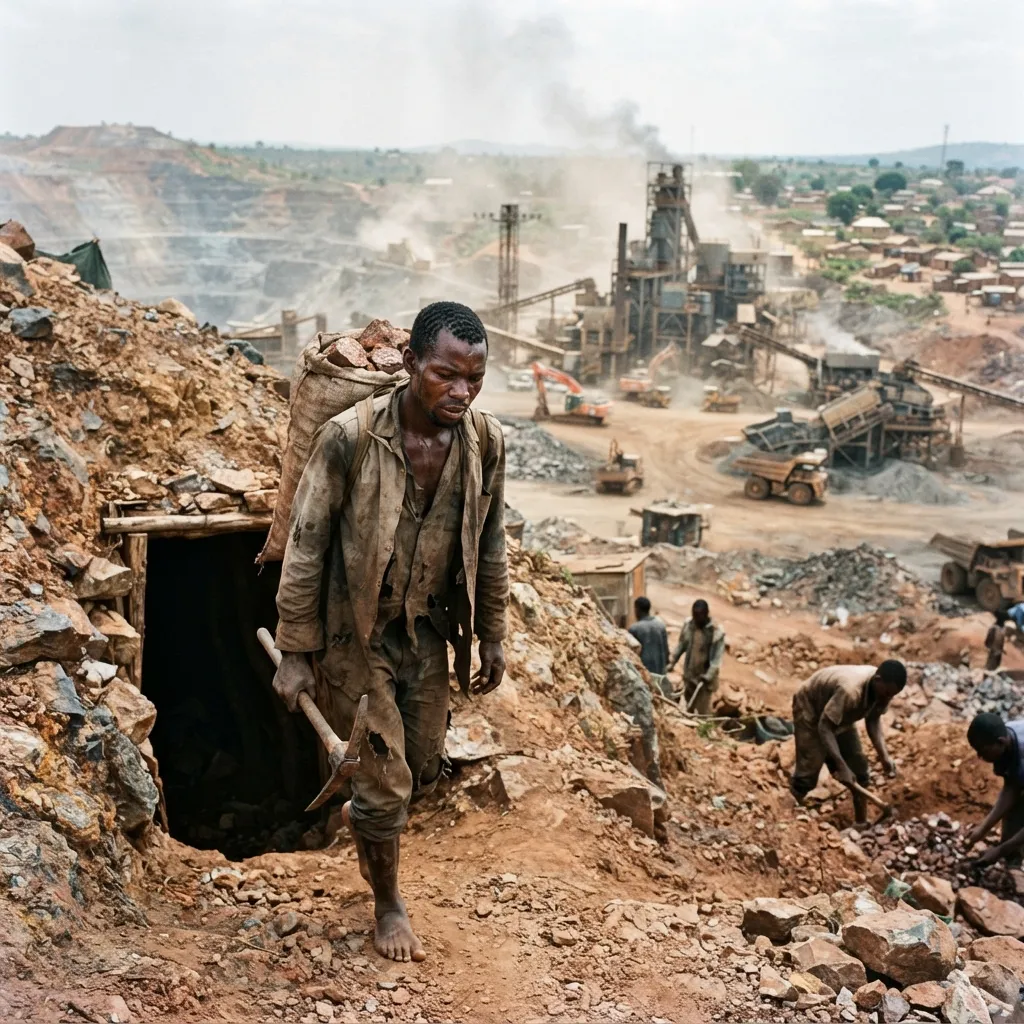
Zambia is currently positioning itself as a cornerstone of the global green energy transition, drawing in billions of dollars from international mining giants eager to secure critical minerals like copper. President Hakainde Hichilema recently highlighted that over twelve billion dollars has flowed into the sector since 2022, with major players from Canada, India, China, and Abu Dhabi establishing deep roots in the country. By offering tax incentives and a stable fiscal framework, the government aims to triple annual copper production to three million tonnes by 2031, envisioning a future where mineral wealth transforms the national economy much like oil did for the Gulf states.
This ambition extends beyond mere extraction. Rather than continuing the historical trend of exporting raw cathodes to industrialized nations, Zambia is pushing for domestic value addition. There are promising discussions regarding a joint venture with the Democratic Republic of Congo and South Africa to manufacture electric vehicle batteries locally. This strategy represents a bold attempt by African nations to stop being simple suppliers of raw materials and instead capture a larger slice of the lucrative global supply chain for renewable energy technology.
However, this surge in foreign capital hasn’t necessarily trickled down to those on the front lines. Trade unions argue that despite soaring copper prices and massive investments, working conditions for ordinary miners remain stagnant. Stephen Mwaanga of the National Union of Miners and Allied Workers notes that employees aren’t seeing meaningful improvements in their lives while companies struggle with rising operational costs fueled by global instability and regional droughts that threaten hydroelectric power supplies. For many workers, the promised prosperity remains an abstract concept discussed in boardrooms rather than a felt reality in the pits.
Adding to these social tensions are grave environmental warnings. The rush to scale up production has led to an increase in smaller Chinese-owned processing plants that often bypass strict regulatory oversight. These shortcuts have already resulted in disasters, such as a tailings dam failure earlier this year that leaked acidic waste into vital river systems. As Zambia races toward its production targets, activists warn that without stronger safeguards and fair labor practices, the cost of powering the world’s green revolution may be paid for by Zambia’s own land and people.